
About the book
Read more about:
Free downloads:
BODY
Written by: Dr. Nick van Dam“To keep the body in good health is a duty. Otherwise, we shall not be able to keep our mind strong and clear.” —Buddha
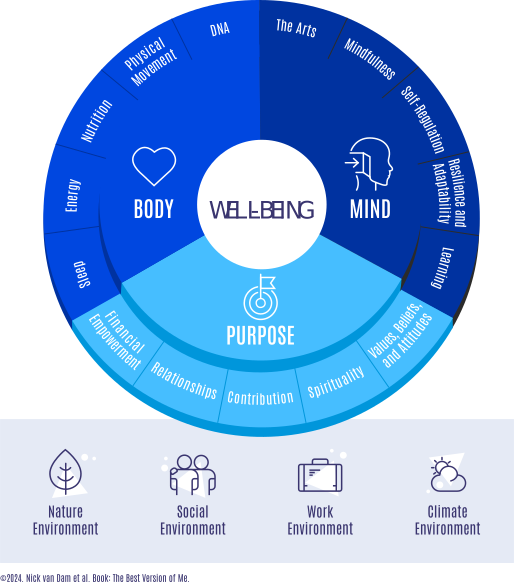
In the first section of the book and of “The Best Version of Me” model—Body—we examine the fundamental aspects of the cornerstone of physical well-being and health. This part of the book is structured into five comprehensive chapters, each exploring a vital component that collectively defines our bodily health and functioning.
Sleep
We explore the indispensable role of sleep in maintaining our health and well-being. Emphasizing sleep’s crucial role in keeping our brain balanced, we learn how it underpins cognitive processes and emotional regulation. We address the significant consequences of sleep loss, which range from diminished mental acuity to increased vulnerability to chronic health conditions. To combat these issues, we introduce five key strategies for improving sleep quality. By the end of this chapter, you will gain a deeper understanding of the importance of sleep and consider practical ways to achieve restful and restorative sleep, which is essential for a balanced and healthy life.
Energy
We investigate the intricate dynamics of energy within the human body, an aspect of well-being often overlooked in our daily hustle. Understanding how our bodies generate, use, conserve, and expend energy is pivotal for maintaining vitality and overall well-being. Here, we explore the delicate balance of energy, acknowledging that it is often challenging to maintain equilibrium in our fast-paced lives. Chronic fatigue, a common ailment in modern society, serves as a stark reminder of what happens when this balance is disrupted: the prolonged absence of energy deeply impacts our ability to function optimally. We delve into the various sources of energy and present practical habits and strategies to restore and maintain the natural state of the mind and body, focusing on cultivating balanced energy.
Nutrition
Nutrition plays a powerful rule in shaping our physical and mental health. A key focus of this chapter is the concept of bio-individuality—the understanding that there is no one-size-fits-all approach to nutrition. Recognizing that each person’s body has unique nutritional needs, we explore how to tailor a nutrition plan that aligns with your individual health requirements, lifestyle, and preferences. This personalized approach is essential for achieving optimal nutrition, given that what works for one person may not be effective for another. We also lay out the necessary components of a balanced nutrition plan. Last, the chapter emphasizes the importance of sustainable nutrition improvement.
Physical Movement
This chapter confronts the global pandemic of physical inactivity, a critical issue affecting health worldwide. We explore physical activity levels, understanding the spectrum from sedentary behavior to vigorous exercise and its impact on our well-being. Highlighting the dire health effects of minimal physical movement, we examine its toll not just on our physical state but also on mental health, including stress and mood disorders. We introduce the “Dance of Life” model, an innovative approach designed to engage and enhance our natural regenerative abilities through movement. This model isn’t merely about exercise; it’s about integrating enjoyable, sustainable physical activity into everyday life. This chapter, therefore, offers insights into making physical activity a joyful and integral part of our daily routine, benefiting both body and mind.
DNA
We examine the complex world of DNA and its role in defining who we are, incorporating the nature versus nurture debate. We critically explore the concept of “DNA as destiny,” challenging the idea that our genetic code is an unalterable path to our future. The chapter investigates the intricate connections between DNA and our physical and mental health, revealing how our genes interact with our environment, behaviors, and lifestyle choices. We also discuss the role of DNA in our overall well-being, emphasizing how understanding our unique genetic makeup can inform better health and lifestyle decisions. This exploration not only deepens our comprehension of the biological foundations of our lives but also empowers us with knowledge to positively influence our health outcomes. By the end of this chapter, you will appreciate the dynamic relationship between your genes and your choices, recognizing DNA not as a fixed destiny but as a crucial factor in your journey toward optimal health.
MIND
Written by: Dr. Nick van Dam“It is not enough to have a good mind; the main thing is to use it well. —René Descartes
In the enlightening Mind section of this book, we shift our focus to the tangled and fascinating world of mental health and cognitive well-being. This section, integral to the comprehensive “Best Version of Me” model, is dedicated to unraveling the complexities of the human mind. It is structured into five insightful chapters, each delving into key aspects that collectively shape our mental landscape.
The Arts
We explore the profound impact of the arts on cognitive, emotional, and mental well-being. This chapter considers how engagement with various art forms can significantly enhance mental health, sharpen cognitive abilities, and enrich emotional experiences. We examine the therapeutic power of the arts in reducing feelings of loneliness, a pervasive issue in today’s fast-paced world. We discuss how artistic pursuits can bolster confidence, foster resilience, and provide valuable tools for dealing with anxiety and depression. We provide tips for enjoying and experiencing the arts more deeply and include helpful guidelines for visiting museums.
Mindfulness
We embark on a journey to understand and cultivate the transformative practice of mindfulness. This chapter introduces the concept of mindfulness not as a fleeting trend but as a fundamental tool for personal growth and mental clarity. We explore five dimensions of mindfulness, each offering a unique perspective and approach: simple knowing, care and compassion, curiosity and inquisitiveness, wise discernment, and using the anchor of the six senses to ground ourselves. In addition, this chapter provides practical mindfulness practices, which may be particularly valuable in times of stress. These practices are designed not just for coping with immediate stressors but also for cultivating a sustained sense of peace and clarity.
Self-Regulation
We look into the multifaceted concept of self-regulation, an umbrella term that encompasses a range of skills, abilities, and internal psychological processes. This chapter demystifies the often-conflated concepts of self-regulation and self-control, highlighting their distinct yet interconnected roles in shaping our behavior and mental processes. We explore self-regulation in a multidimensional context, recognizing its complexity and the various ways it manifests in our lives. The impact of self-regulation extends far beyond the individual, affecting our interactions with others and our overall contribution to our environment. Additionally, this chapter offers practical advice and strategies for enhancing self-regulation.
Resilience and Adaptability
We investigate the pivotal roles resilience and adaptability play in personal growth and well-being. These qualities are not just buzzwords; they are fundamental traits that enable us to navigate life’s challenges and changes with grace and strength. This chapter explores resilience and adaptability within the framework of four elements of holistic health: physical, emotional, mental, and spiritual. Each element showcases how resilience and adaptability manifest and can be strengthened in these different dimensions of our lives. Understanding that resilience is about learning and growing from hardship, and that adaptability is about embracing change as an opportunity, this chapter provides practical strategies and practices for enhancing these qualities.
Learning
We explore the expansive and dynamic concept of learning, not as merely an academic exercise but as a continuous, life-enriching process that significantly impacts various facets of our lives. We delve into how learning profoundly influences personal growth, enriches our perspectives, and enhances our understanding of ourselves and the world around us. We also address the impact of learning on social life, revealing how learning improves communication and empathy, leading to stronger and more meaningful relationships. Additionally, we consider learning’s crucial role in career development, where continual skill acquisition and adaptability are key to professional success and satisfaction. This chapter also offers a range of evidence-based practices that boost well-being through learning.
PURPOSE
Written by: Dr. Nick van Dam“Life is never made unbearable by circumstances, but only by lack of meaning and purpose.”—Viktor E. Frankl
In the third section of The Best Version of Me, we venture beyond the realms of body and mind to explore integral aspects of our lives that collectively shape our personal fulfillment and societal contributions. This section, composed of five transformative chapters that offer a holistic approach to personal development, enables readers to build a life that is not only successful on the outside but also rich and fulfilling on the inside.
Financial Empowerment
We dive into understanding what it means to be financially empowered. This chapter goes beyond basic financial literacy, exploring the profound role money plays in our lives, not just as a means of transaction but as a significant influence on our choices, opportunities, and sense of security. We examine the concept of financial empowerment as a critical component of personal autonomy and self-efficacy, demonstrating how having control over our finances directly impacts our overall well-being. This exploration sheds light on how financial empowerment supports well-being by providing a sense of stability, freedom, and the ability to make choices that align with our purpose, values, and life goals.
Relationships
We investigate relationships as the essence of being human. This chapter explores the varied forms of relationships, from intimate bonds and friendships to community involvement and reciprocal interactions, highlighting their vital role in our lives. We examine the significant benefits of fostering positive relationships such as enhanced emotional health and a deeper sense of belonging. The chapter also provides practical strategies for nurturing healthy relationships. These insights are designed to help you build and maintain meaningful connections, which are crucial for personal growth and well-being. By understanding and valuing the power of relationships, this chapter guides you toward enriching your life and becoming the best version of yourself through the art of human connection.
Contribution
We explore how the act of contribution profoundly shapes our psychological well-being by understanding its key characteristics and the fulfilling role it plays in our lives. We categorize contribution into five distinct types: individual, collective, professional, societal, and humanitarian Additionally, we provide actionable steps for advancing your contribution in meaningful ways. Whether through small, everyday acts or larger, community-focused initiatives, this chapter offers guidance on how to effectively make a difference.
Spirituality
We embark on a journey to understand the diverse interpretations of spirituality. This chapter presents spirituality not as a one-dimensional concept but as a multifaceted experience, explored through the lens of the knowledge-continuum model.
We consider the transformative power of spirituality in various aspects of life, such as finding purpose and meaning beyond our daily existence, fostering a sense of interconnectedness with the larger universe, cultivating inner peace and resilience in the face of life’s challenges, and harmoniously integrating rationality with intuition. Each of these elements offers a unique pathway to deepen our spiritual understanding and experience. Finally, the chapter provides practical strategies for infusing spirituality into your daily life.
Values, Beliefs, and Attitudes
We investigate the core components that fundamentally shape our perception of the world and guide our actions. This chapter takes a deep dive into the nature of our values, beliefs, and attitudes, exploring how these internal compasses are formed and how they influence every aspect of our lives, from daily decisions to long-term goals. We also examine the power that comes from aligning our values and beliefs with our actions. In addition, the chapter provides practices and strategies to help reinforce and advance your values, beliefs, and attitudes.
ENVIRONMENT
Written by: Dr. Nick van Dam“Look deep into nature, and then you will understand everything better.” —Albert Einstein
The fourth and final part of our book considers one’s environments.” Following the exploration of body, mind, and purpose, we emphasize the power we possess as individuals to influence and shape four environments for our betterment, underlining the idea that though we are products of our environments, we also have the agency to mold them in ways that support and enhance our journey toward becoming the best version of ourselves.
Nature Environment
We examine the significant impact of natural surroundings on our well-being. This chapter explores how exposure to nature—from forests to oceans—positively affects our physical health, mental clarity, and emotional well-being through stress reduction and mood enhancement. We also discuss actionable steps for individuals and organizations to incorporate the natural environment into their well-being. By highlighting the importance of nature in our lives, this chapter encourages a deeper connection with the natural world, emphasizing its crucial role in achieving a balanced and fulfilling life and aiding our journey to become the best version of ourselves.
Social Environment
We explore the concept of social environment and its critical role in shaping our lives. This chapter defines social environment as the combination of relationships, culture, values, institutions, and physical spaces that influence an individual’s experiences, social interactions, and opportunities. We examine key characteristics, including the nature of our interactions and the influence of our community and culture, and how these factors collectively impact our well-being. The chapter also discusses strategies for cultivating a positive social environment. By understanding and actively shaping our social surroundings, we aim to create a more supportive and enriching atmosphere, which is essential for personal growth.
Work Environment
We examine the work environment as a combination of physical space, social dynamics, and psychological conditions in the workplace. This chapter differentiates between positive and negative work environments, emphasizing their impact on job satisfaction, productivity, and overall well-being. Special focus is given to the expectations and needs of Generation Z, highlighting the importance of a supportive and fulfilling work environment for this group now entering the workforce. We also outline the key elements of a great workplace, including supportive leadership, positive culture, and opportunities for growth. Additionally, the chapter provides strategies to optimize your work environment, aiming to enhance both personal and professional well-being.
Climate Environment
We focus on climate change, defined as the long-term alteration of temperatures and weather patterns. This chapter outlines the main causes of climate change and discusses its direct impact on human well-being, including physical health and psychological effects. We also present the importance of engaging in purposeful climate-related actions such as adopting sustainable practices and advocating for environmental-protection policies. These actions not only help mitigate the global climate crisis but also enhance personal well-being by fostering a sense of responsibility. This chapter aims to empower readers to take actionable steps toward a more sustainable lifestyle, emphasizing the role individual actions play in both global environmental health and personal fulfillment.